| Repurposing, recycling and refurbishing existing batteries
Given the strong penetration of electric vehicles and renewable energy sources, the battery demand is dramatically increasing.
In order to satisfy this huge request for batteries, a possible solution, taking into account a circular economy framework, is given by Second-life batteries (SLB): a new technology which exploits deteriorated batteries from the EV sector for less demanding applications, such as stationary storage.
THE SCENARIO
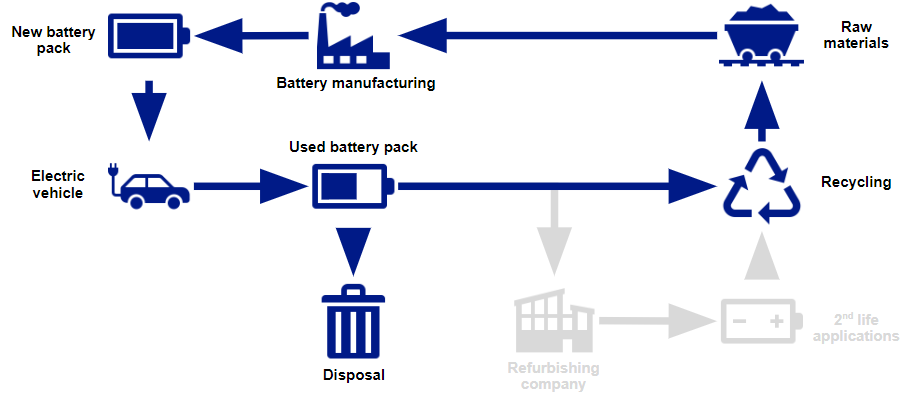
The typical EV battery lifecycle involves several stages. It begins with the collection of raw materials for manufacturing the battery, followed by the creation and installation of the battery pack in the vehicle. Over time, as the vehicle undergoes multiple driving cycles, the battery becomes less efficient and eventually reaches the end of its usable life. At this point, the battery needs to be partially disposed of and recycled to recover some of the valuable raw materials. However, this process falls short in terms of fully harnessing the battery's potential.
New battery pack
Battery manufacturing
Raw materials
Electric vehicle
Used battery pack
Recycling
Disposal
Refurbishing company
2nd life applications
THE SCENARIO
Life2SLB is dedicated to exploring the concept of Second-life batteries (SLB), wherein battery packs are repurposed and tested for use in less demanding applications outside the automotive sector. Our primary objective is to address both economic and technical aspects, aiming to determine the viability of diagnosing these batteries and assessing the profitability of the venture. By investigating these questions, we seek to unlock the potential of SLB and pave the way for sustainable and cost-effective battery solutions.
New battery pack
Battery manufacturing
Raw materials
Electric vehicle
Used battery pack
Recycling
Disposal
Refurbishing company
2nd life applications
Previous slide
Next slide
BATTERY TESTING
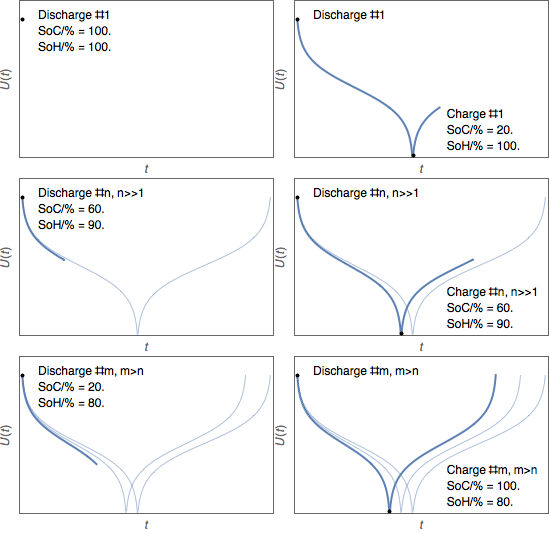
The main parameter to asses whether or not the battery may be used for SLB applications is the State-Of-Health (SOH) which indicates the actual capacity of the battery respect to the nominal one.
In this case, the challenge is measuring the SOH of the battery pack in a fast way implementing data-driven algorithms to perform an Incremental Capacity Analysis (ICA) with the final aim to estimate the SOH with high accuracy in a small-time interval.
ECONOMIC ASSESSMENT
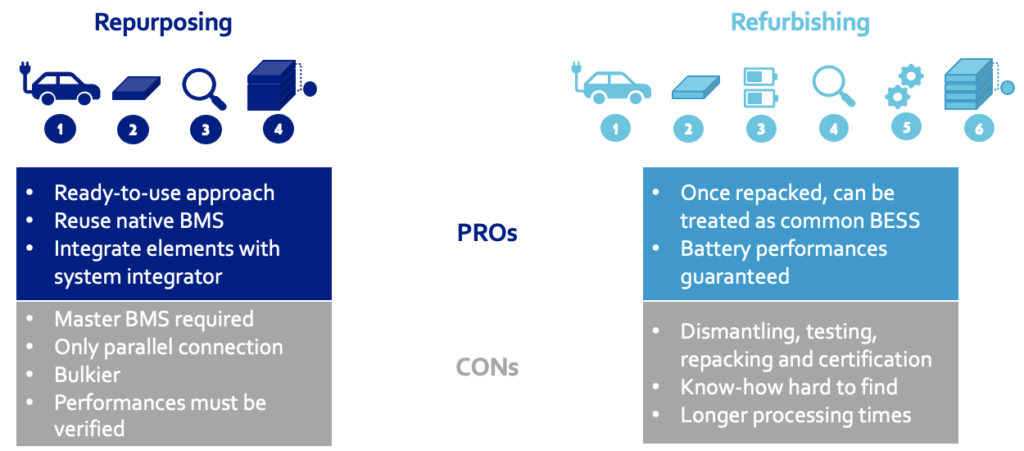
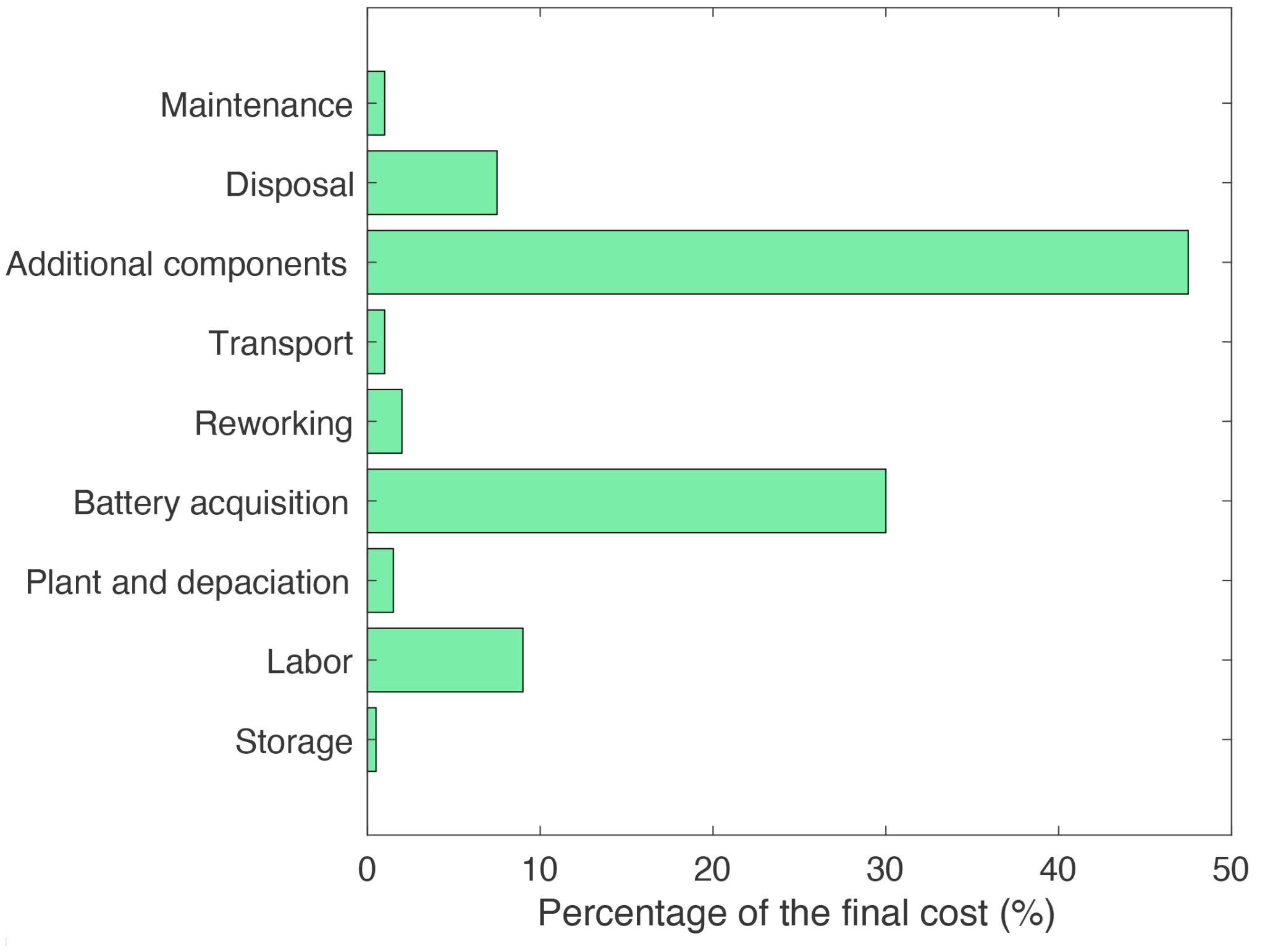
The goal of the economic assessment is to create a cost model related to the SLB business where different scenarios are analysed to see which is the business strategy more profitable. Two options could be repurposing (reusing the battery pack as it is) or refurbishing (dismantling the pack and extract either the modules or cells).
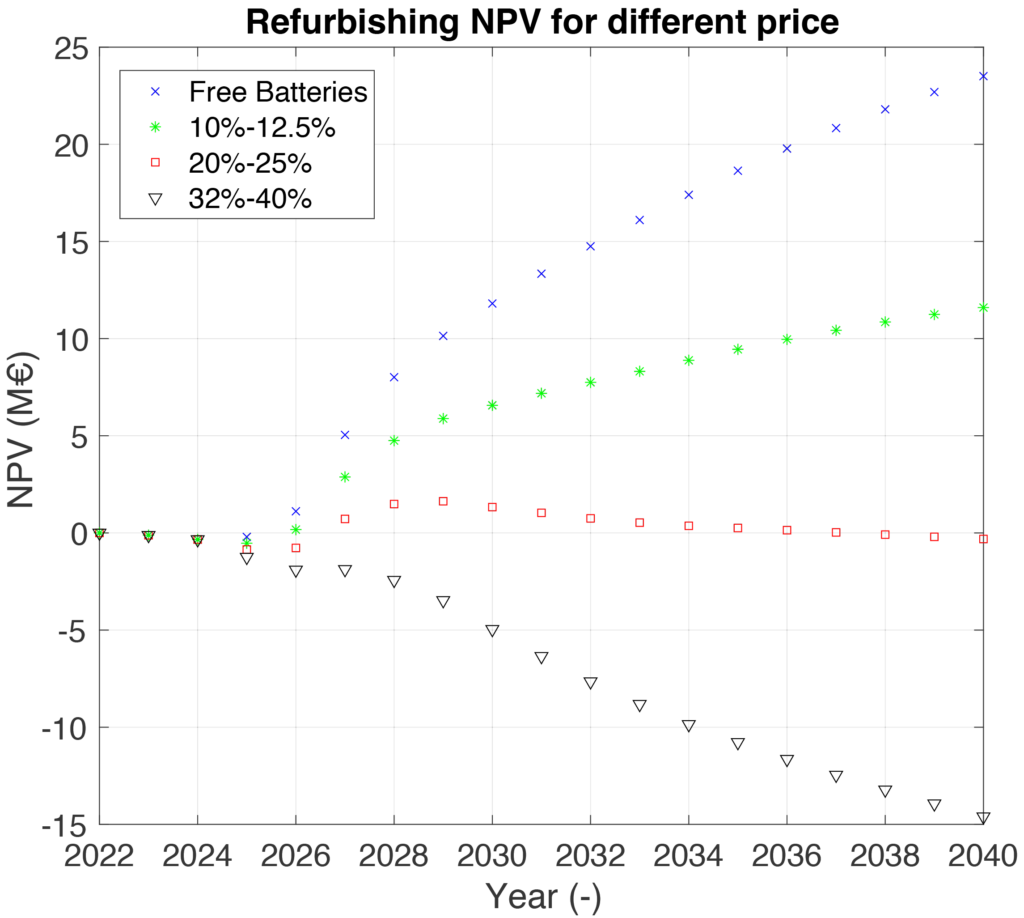
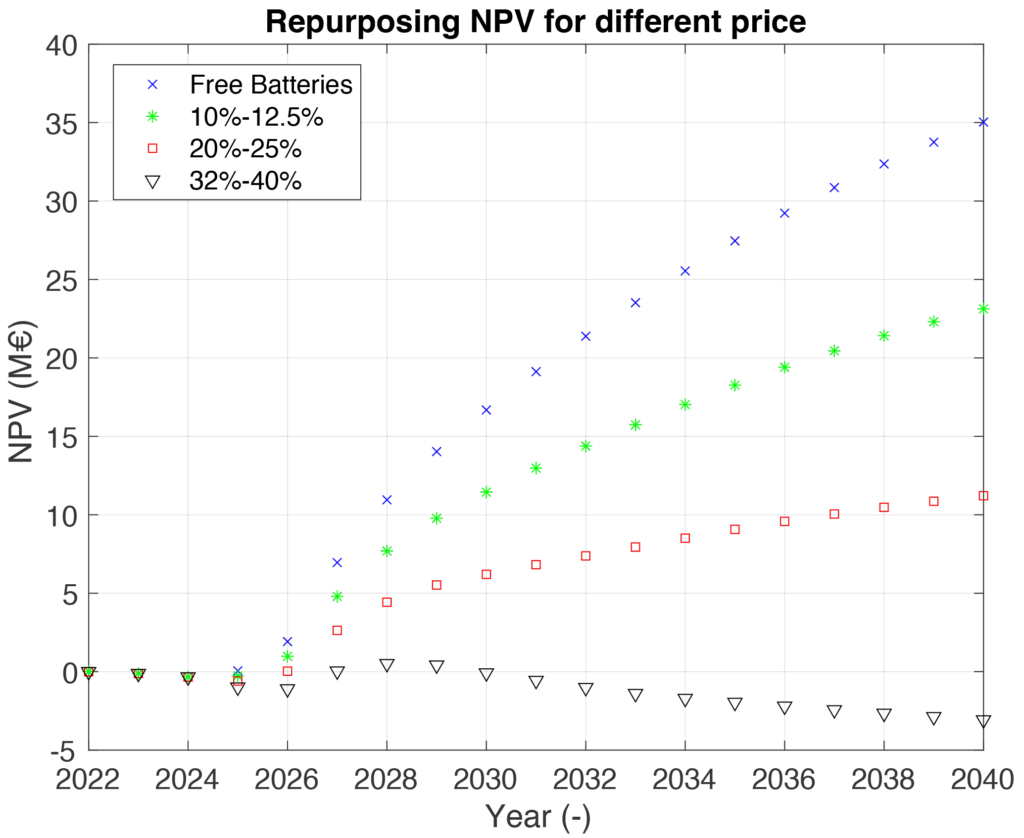
For both scenarios the Net Present Value (NPV) has been evaluated including the range of different main parameters that varies the final results.
Results
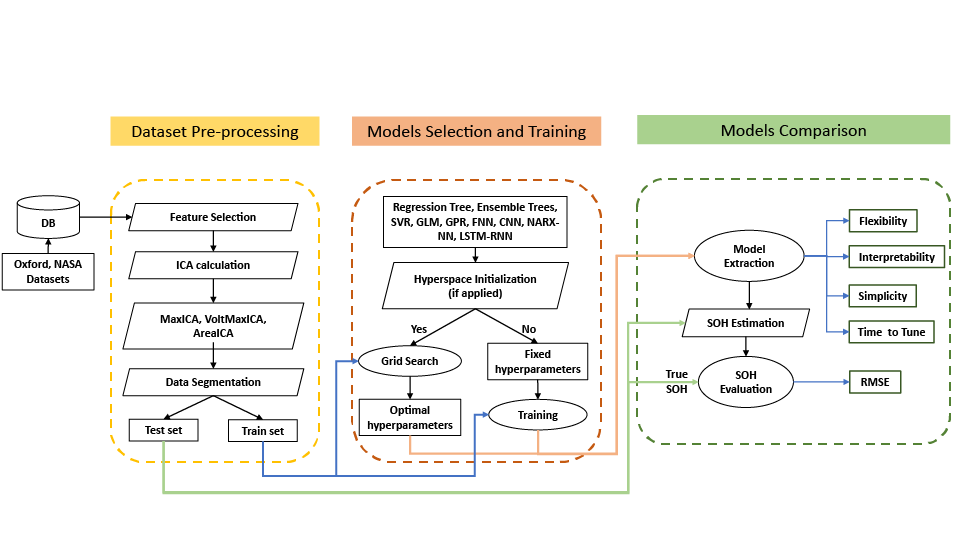
1. Through the usage of open-source datasets, different data-drive algorithms have been implemented using the following strategy:
More details are present in the paper, where all the final results are shown.
2. The cost model identifies which are the main factor that impact the final cost of a SLB product and starting from the most significant it was possible to evaluate the NPV for both repurposing and refurbishing cases:
Repurposing appears more convenient with respect to refurbishing which makes sense since the cost are higher in the second case. More details are present in the paper from where the picture are extracted.